
Choosing the right CMS development approach affects your website’s future. Your content management system controls how you publish content, manage updates, and scale your business online.
Today, more than 40 percent of websites use a CMS. WordPress alone powers over 40 percent of all websites worldwide. This shows how popular pre-built systems are.
But popular does not always mean suitable.
Many business owners later face slow speed, security risks, and plugin conflicts. On forums like Reddit, developers often share concerns about heavy plugins and limited flexibility in pre-built platforms.
This is where Custom CMS development becomes important. Some businesses need better control, stronger security, and room to grow without restrictions.
A trusted web development company can help you choose the right path. The right CMS development services prevent future rebuild costs and technical issues.
In this blog, you will understand the difference between pre-built systems and Custom CMS development. You will learn which option supports your long-term business goals.
What Is a Pre-Built CMS?
A pre-built CMS is a ready-made platform for managing website content. It comes with basic features, themes, and plugins. You install it and start building your site.
Many businesses choose this option for quick CMS development. It saves time in the beginning. A web development company can set it up fast and get your site live.
Pre-built systems work well for simple websites. They suit blogs, small business sites, and basic service pages.
Why Businesses Use Pre-Built CMS?
- Faster setup
- Lower starting cost
- Ready themes and plugins
- Large user community
For many small projects, this is enough.
Things to Consider
Pre-built systems depend on plugins. Too many plugins can slow your website. Some updates can cause issues.
Security also depends on regular updates. If you skip them, risks increase.
As your business grows, you may need more control. That is when Custom CMS development or advanced CMS development services become important.
What Is Custom CMS Development?
Custom CMS development means building a content system from scratch for your business. It is created based on your exact needs. It does not rely on ready themes or heavy plugins.
A web development company designs the admin panel, features, and structure around your workflow. You decide how content is managed. You decide what features are included.
This type of CMS development gives you full control.
Why Businesses Choose Custom CMS Development?
- Only the features you need are built
- Cleaner code and better performance
- Stronger security with fewer third-party risks
- Easy connection with your internal tools
With Custom CMS development, the system supports your business model. You do not adjust your business to fit the platform.
Important Things to Know
Custom CMS development takes more time to build. The starting cost is higher than pre-built options. But it gives long-term flexibility.
Many businesses choose CMS development services for this reason. They want a system that can grow with them.
Custom CMS vs Pre-Built CMS Comparison
If you are confused between custom CMS development and a pre-built CMS, let me break it down in simple terms.
Both options help you manage content. Both can support your website development goals. But they work in different ways.
A pre-built CMS is ready to use. It saves time in the beginning. A custom CMS is built from scratch. It takes more time but gives full control.
Here is a clear comparison to help you decide.
Add a Table
Which One Is Better for Your Business?
If you want speed and lower cost, a pre-built CMS works well.
If you want control, better performance, and long-term growth, a custom CMS development is a smart investment.
Many growing brands choose a reliable website development company to guide this decision. The right CMS development services will match your budget, goals, and plans.
When Should You Choose a Pre-Built CMS?
A pre-built CMS works well in many practical cases. It is simple. It is cost-friendly. And it helps you launch faster.
Here is when it makes sense.
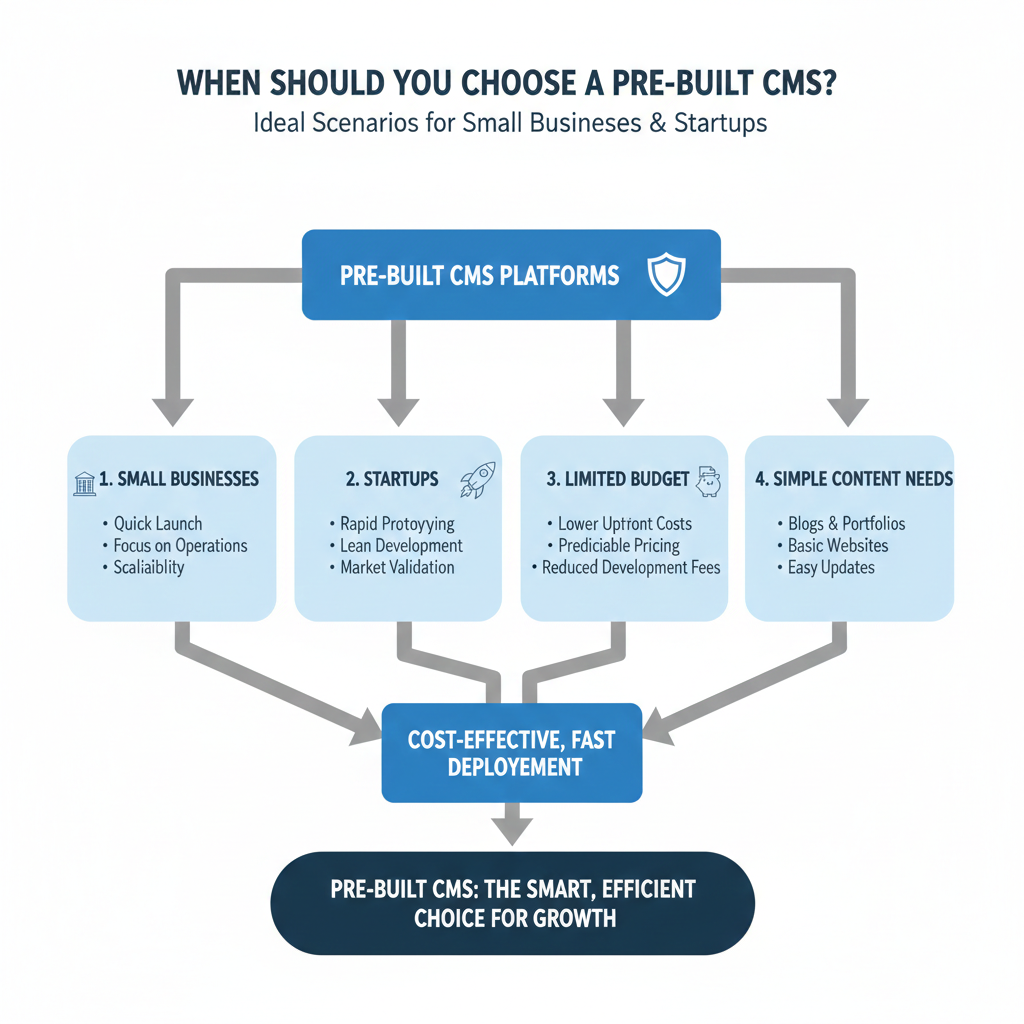
1. Small Businesses
If you run a small business, you may not need complex features. You need a clean website. You need basic content management. A pre-built CMS can handle this well.
It allows you to manage pages, blogs, and images without great technical skills. Many small businesses work with a web development company to set it up and keep things smooth.
2. Startups
Startups often need to move fast. Time matters. Budget matters.
A pre-built CMS helps you launch your website development project quickly. You can test your idea in the market without spending too much at the start. Later, you can scale if needed.
3. Limited Budget
If the budget is tight, this option is practical. You save on custom CMS development costs. Themes and plugins are often affordable.
You can still build a professional website with the right CMS development services. It just needs smart planning.
4. Simple Content Needs
If your website only needs basic pages, blog posts, and contact forms, a pre-built CMS is enough.
You do not need complex workflows. You do not need advanced integrations. In such cases, keeping things simple is the best choice.
Ready to build a website that grows with your business?
Speak with our experts and get a CMS solution tailored to your goals, budget, and long-term growth.
When Should You Choose Custom CMS Development?
Custom CMS development is better when your business is growing, and your needs are more specific.
Here is when you should consider it.
1. Growing Businesses
As your business grows, your website needs change. You may need new features. You may need better performance.
A custom solution gives you flexibility. A skilled website development company can build features that match your long-term goals.
2. Unique Workflows
Some businesses have special processes. For example, custom approvals, user roles, or data handling systems.
A pre-built CMS may not support these properly. Custom CMS development allows you to build around your exact workflow. This improves efficiency.
3. High Traffic Websites
If your website gets heavy traffic, performance becomes important.
A custom CMS can be optimized for speed and stability. It avoids unnecessary plugins and extra code. This helps your website development stay smooth even during peak traffic.
4. Security Sensitive Industries
If you work in finance, healthcare, or other security-focused sectors, protection is critical.
Custom CMS development allows tighter control over security features. You can reduce common risks that often affect popular pre-built systems.
In the end, the right choice depends on your business stage, budget, and goals. A trusted web development company can guide you based on real needs, not trends.
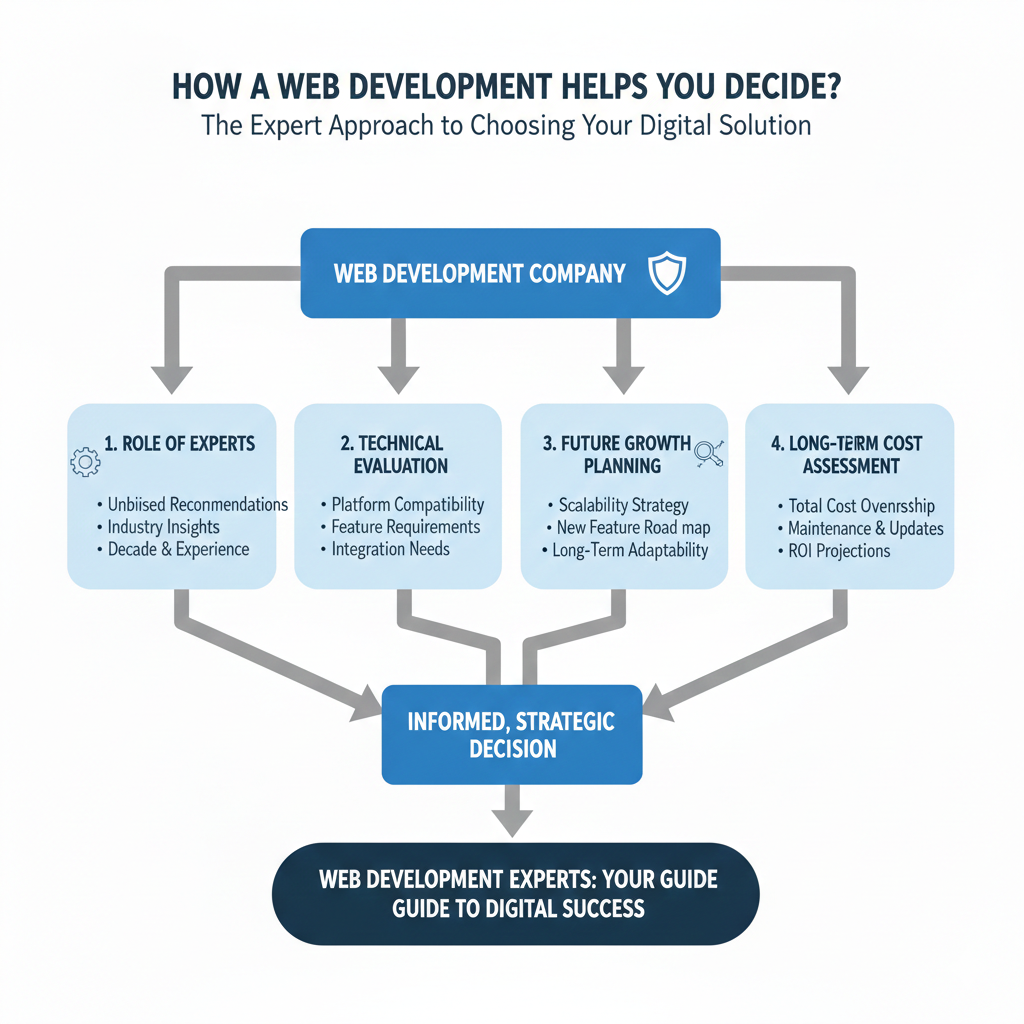
How a Web Development Company Helps You Decide?
Choosing between a custom and a pre-built CMS is not always simple. On paper, both can look good. The real difference shows when you study your business needs closely.
This is where a web development company adds real value.
1. Role of Experts
Experienced teams have worked on different types of websites. They know what works and what creates problems later.
They ask the right questions. What is your goal? How much traffic do you expect? Do you need custom features? Their advice is based on real projects, not guesswork.
At EMU Digital Agency, the focus is always on practical solutions. The team looks at your business model first. Then they suggest the right CMS development approach.
2. Technical Evaluation
Many business owners are not technical. That is normal. But choosing a CMS requires technical understanding.
A professional team checks performance needs, hosting setup, integrations, and security risks. They compare pre-built platforms with custom CMS development options in detail.
This helps you avoid future issues. It also helps you invest in the right CMS development services from the start.
3. Future Growth Planning
Your website should support your growth. It should not limit it.
A good web development company thinks long-term. They plan for scaling. They check if your CMS can handle more users, more content, and more features in the future.
EMU Digital Agency takes growth planning seriously. Whether you need a flexible pre-built setup or full Custom CMS development, the focus stays on long-term stability.
4. Long-Term Cost Assessment
The starting cost is only one part of the picture.
You also need to think about maintenance, updates, security fixes, and performance improvements. A cheap option today can become expensive later.
An experienced team reviews the full cost over time. This helps you make a smart and stable decision.
Final Thoughts: Choosing the Right CMS for Long-Term Growth
There is no single best option for everyone.
A pre-built platform works well for small businesses and simple content needs. Custom CMS development works better for businesses that need flexibility, control, and scalability.
The right choice depends on your goals and plans.
If you want clear advice and reliable CMS development services, EMU Digital Agency can help you choose and build a system that supports your business for the long run.
Frequently Asked Questions
1. Why should I work with EMU Digital Agency for CMS development?
Answer: EMU Digital Agency focuses on practical and long-term solutions. The team studies your business model first. Then they suggest the right CMS development approach.
Whether you need a simple pre-built setup or full Custom CMS development, the goal is stable growth and fewer technical issues in the future.
2. Are pre-built CMS platforms less secure?
Answer: Not always. But they are common targets because many websites use them. Security depends on updates and proper setup.
Custom CMS development reduces third-party risks because fewer external plugins are used.
3. Is a pre-built CMS good for small businesses?
Answer: Yes. A pre-built CMS works well for small businesses with simple needs. If you only need basic pages, blogs, and contact forms, it is often enough.
Many small brands work with a web development company to set it up properly and avoid common mistakes.
4. Can I switch from a pre-built CMS to a custom CMS later?
Answer: Yes, but it can take time and cost more if not planned early. That is why it is important to choose the right CMS development approach from the beginning.
